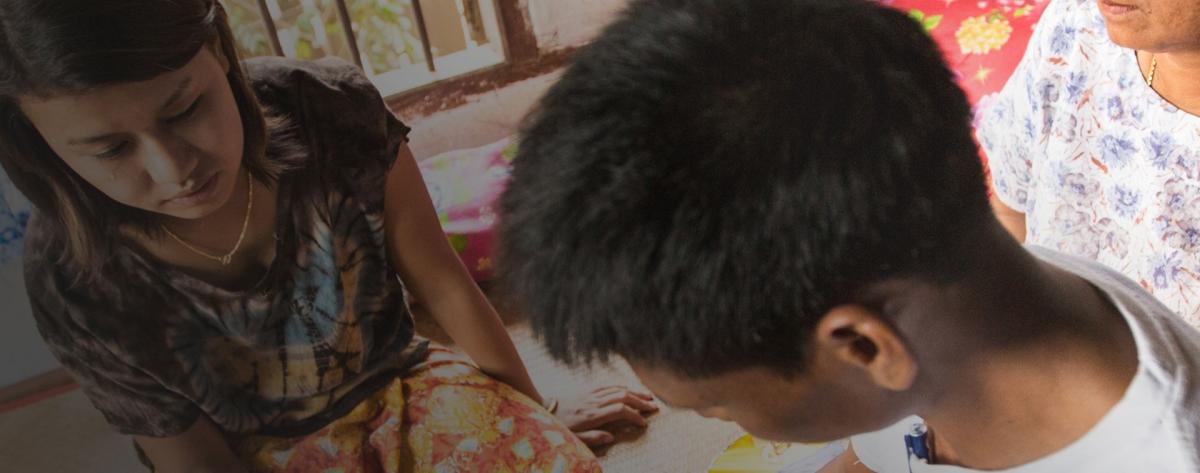

Migrant populations are at high risk of malaria due to their mobility, and have limited access to malaria prevention, diagnostic testing and treatment services. Tackling malaria in this group is seen as crucial in averting the spread of artermisinin resistant malaria.
The “malaria corners” are being set up by the American Refugee Committee (ARC) and funded by the Regional Artemisinin-resistance Initiative.
At the corners, malaria diagnostic testing and treatment services are available and patients with a confirmed malaria diagnosis and who agree to receive directly observed treatment for malaria are provided free LLINs along with other care and support services.
This promotes early treatment seeking for malaria among the at-risk populations, essential to contain the spread of artemisinin resistance and accelerate elimination of P. falciparum malaria in the region.
The ‘malaria corners’ are part of ARC’s malaria control and artemisinin containment activities to transient and mobile populations’ in the south-eastern area of Myanmar.
The project is reaching both static and transient and mobile population groups in 291 remote, hard-to-reach villages along the Myanmar-Thailand border in Mon State, Kayin State, Tanintharyi Region and Bago (East) Region.
“Malaria corners are entry points to reach mobile and migrant populations working in remote south-eastern Myanmar – where P. falciparum malaria is still endemic in spite of the declining disease burden,” said Dr Eisa Hamid, UNOPS monitoring and evaluation specialist, who visited ARC projects in the border area in Tanintharyi Region.
In collaboration with local authorities, health facilities and communities, American Refugee Committee has established 15 malaria corners at crossing points along the Myanmar-Thailand border.
Under the guidance of the National Malaria Control Programme and respective state/regional health departments, the project is being implemented with the engagement of local health facilities and ethnic health partners—the Karen Health Development Network and the Mon National Health Committee.